Korean Markets (Jang)
Translated from the Korean original.
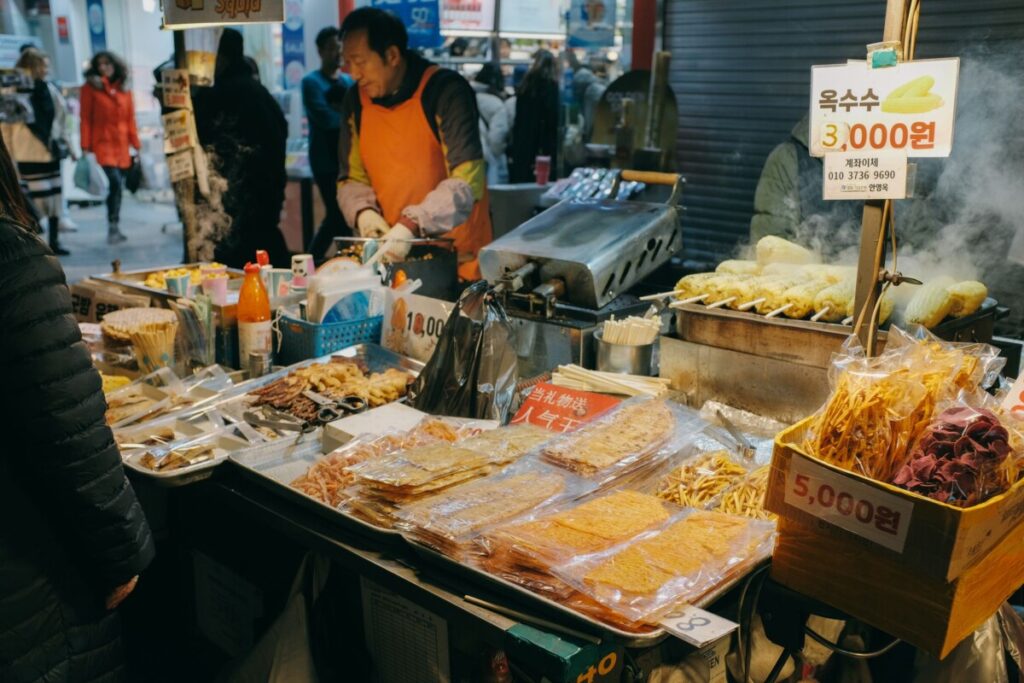
Are you familiar with Korea’s market culture? Today, with photos alongside, let’s talk about the charm and the singularity of Korean markets.
1. The History and Meaning of Traditional Markets
Korea’s traditional markets have a long and proud history. Beginning in the Joseon Dynasty, they served as centers of exchange and of community life. In the early days, markets were held every fifth day, drawing people together on a regular cycle. That tradition continues into the present.
2. The Different Kinds of Markets
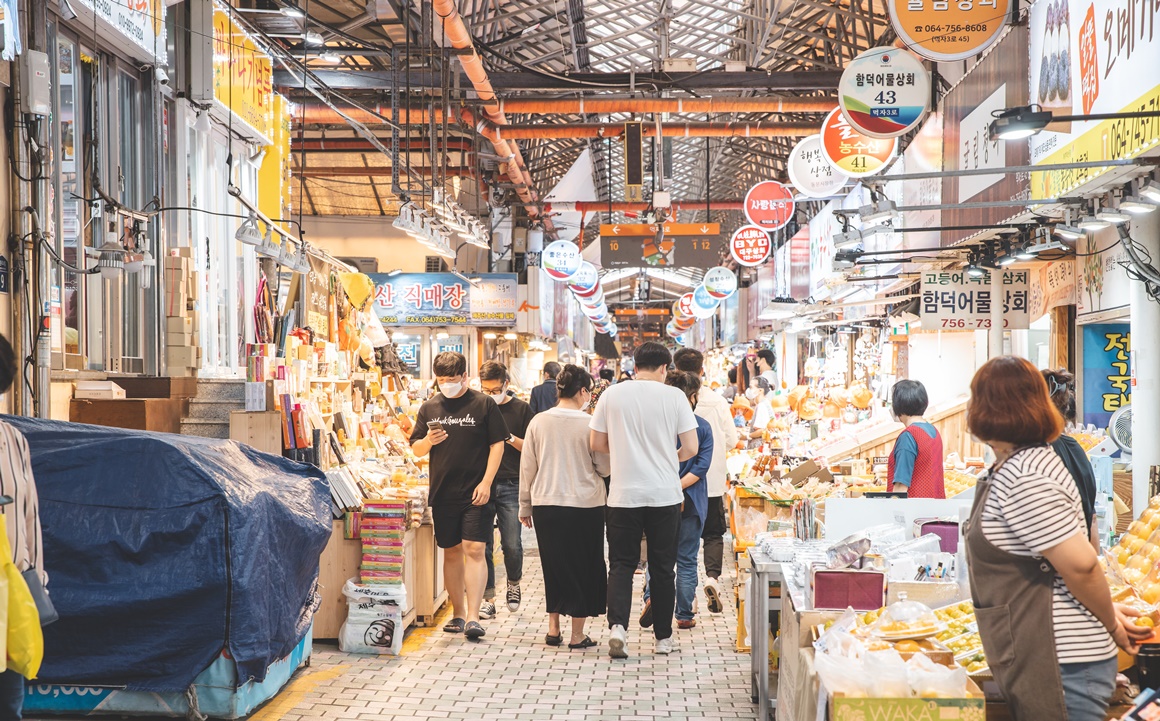
Korea has several types of markets: traditional markets, old-style rural markets, and the night markets and flea markets that have become popular more recently.
Traditional markets
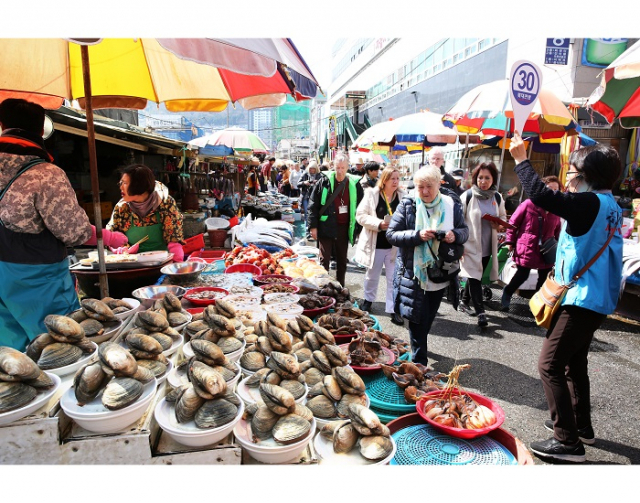
Traditional markets still play an important role in their local communities. Namdaemun Market in Seoul, Jagalchi Market in Busan and Seomun Market in Daegu are leading examples. In these places you can buy fresh produce, seafood and traditional foods at low prices.
Old-style rural markets
Old-style rural markets are mostly located in farming regions and sell local specialties and fresh produce. Gokseong Market in Jeollanam-do, for instance, is well known as a place to buy fresh fruit and vegetables along with regional specialties.
Night markets
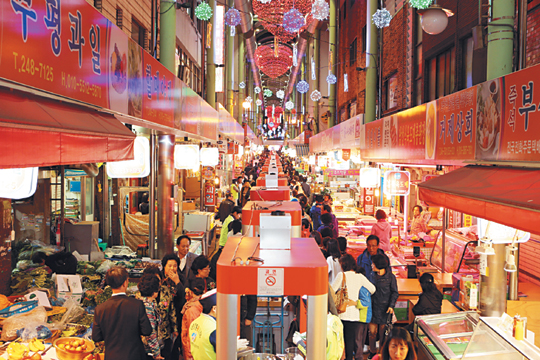
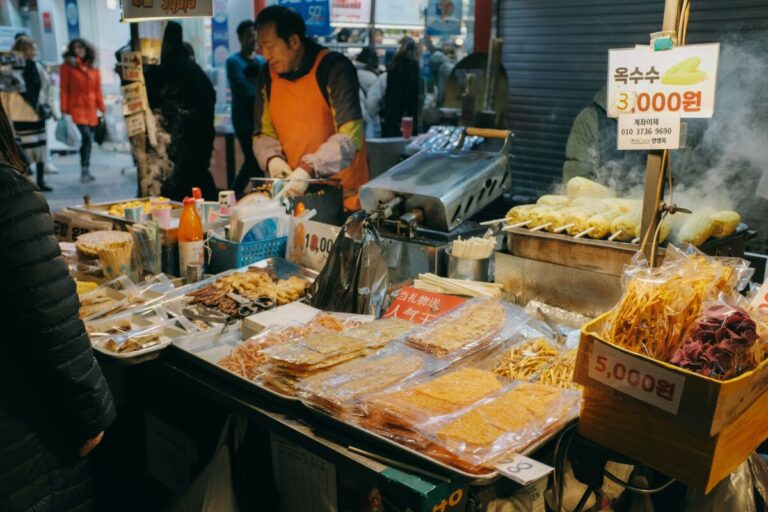
These days night markets are enormously popular. Gwangjang Market and the Hongdae night market in Seoul, and the BIFF Square night market in Busan, are places to enjoy all kinds of street food and distinctive goods. Night markets are especially popular with young people and tourists, and they stay lively late into the night.
3. Cultural Experiences at the Market
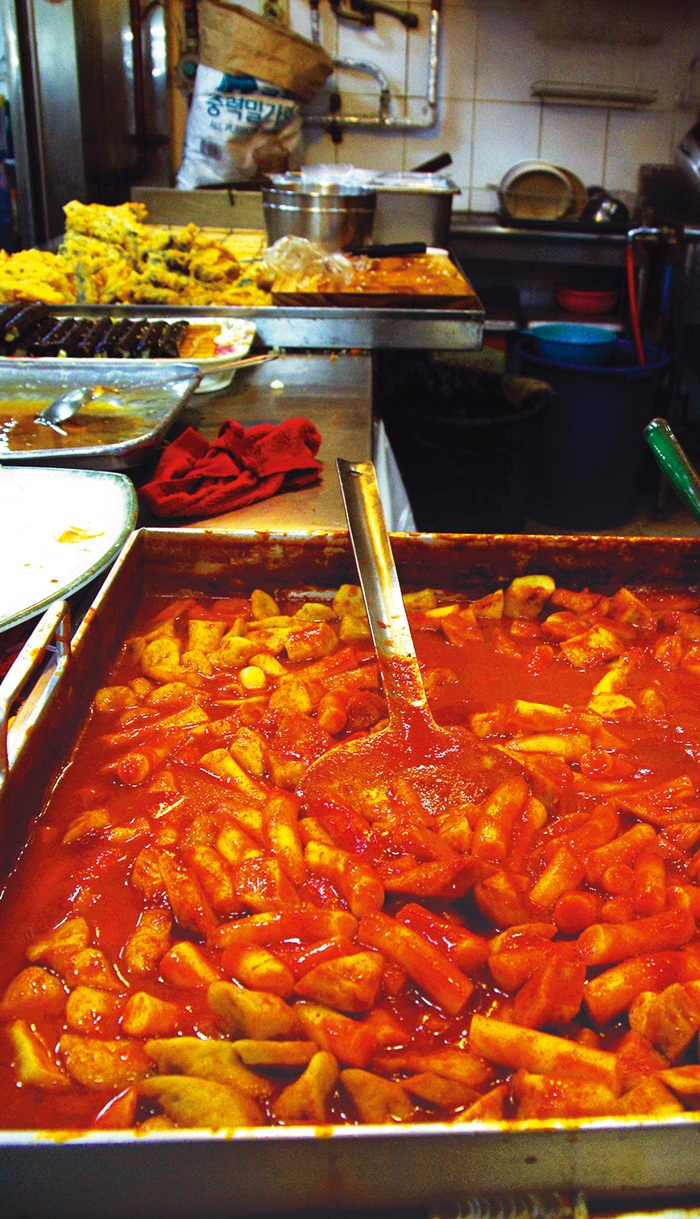
Korean markets offer far more than buying and selling. At traditional eateries you can taste Korean dishes such as kimchi, bibimbap and tteokbokki, and you can even try making them yourself. At traditional craft shops you can admire and buy traditional arts such as hanji paper crafts, ceramics and embroidery.
Food experiences
The eateries inside the markets are popular with locals and tourists alike. At Gwangjang Market, for example, you can enjoy a range of street food including mayak gimbap (the famous “narcotic” kimbap), bindaetteok mung bean pancakes and sundae. Alongside them, restaurants serving traditional Korean meals offer a variety of dishes with neatly prepared side dishes.
4. How Markets Are Changing
Traditional and old-style markets are developing alongside modern change. Many markets have brought in modern facilities and combined with online shopping to reach more customers. These changes show markets adapting to contemporary society without losing the charm that makes them what they are.
Online meets offline
Recently many traditional markets have begun selling their goods through online platforms. This lets them reach far more customers, and during the COVID-19 pandemic the shift was a great help to their survival. Markets have also introduced mobile payment systems to make shopping more convenient.
Korean markets are more than places of commerce — they are places to experience and enjoy a whole range of culture. If you visit Korea, I highly recommend seeking out a traditional market and trying it all for yourself!

Comments
Be the first to comment. Please avoid sharing personal or medical records.